
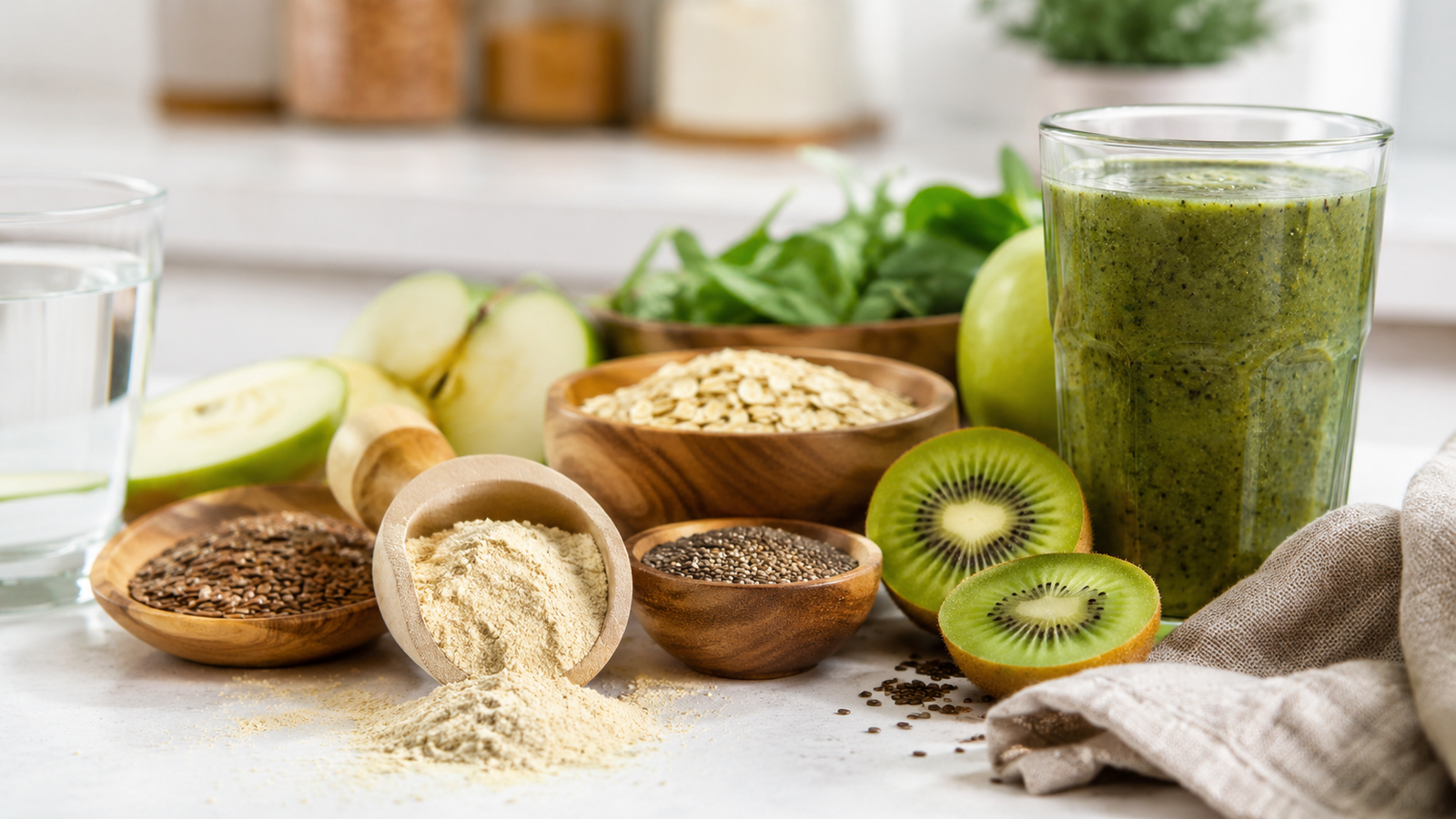
Why Fiber Matters in a Weight-Management Routine
Weight management is often reduced to calories and exercise, but sustainable habits usually involve much more. Food quality, protein, fiber, hydration, sleep, activity level and consistency all influence how manageable a routine feels over time.
Dietary fiber is especially useful because it contributes to digestive health and can help make meals feel more satisfying. That does not make fiber a weight-loss drug or a shortcut. Instead, it is one practical part of a balanced eating pattern.
What Is Dietary Fiber?
Fiber is the part of plant foods that is not completely broken down during digestion. Different types of fiber behave differently in the digestive system, which is why a varied diet is preferable to relying on only one source.
Common fiber-containing foods include:
- Vegetables
- Fruit
- Beans and lentils
- Oats and whole grains
- Nuts and seeds
- Psyllium husk
Fiber and Fullness
Meals containing adequate fiber often feel more satisfying than highly refined foods with very little fiber. Fiber-rich foods also tend to come packaged with water, vitamins, minerals and other useful nutrients.
For weight management, the goal is not to eliminate entire food groups. A more practical strategy is to build meals around quality protein, vegetables or fruit, a sensible carbohydrate source and some healthy fat. Fiber naturally fits into this pattern.
Fiber and Digestive Regularity
One of fiber’s best-known nutritional roles is supporting normal digestive regularity. Adequate water intake is an important part of this process, particularly when increasing fiber intake or using concentrated fiber supplements.
If your current diet is very low in fiber, suddenly adding a large amount can feel uncomfortable. Increasing gradually gives your routine time to adjust.
What Are Prebiotic Fibers?
Some fibers are described as prebiotic because they can be used by beneficial microorganisms in the gut. Prebiotic ingredients are commonly included in modern digestive-wellness products for this reason.
Again, more is not automatically better. The best amount depends on the individual, the rest of the diet and how well the digestive system tolerates different ingredients.
Psyllium Husk as a Fiber Source
Psyllium husk is a concentrated fiber ingredient that absorbs water. It is often used in powdered fiber supplements because it can be mixed into water or another beverage.
When using psyllium or another expanding fiber, follow the product directions carefully and take it with sufficient fluid. Do not consume dry fiber powder without adequate liquid.
Building a More Sustainable Weight-Management Plate
Instead of searching for one “fat-burning” ingredient, focus on a structure you can repeat. A balanced plate might include:
- A source of protein such as fish, eggs, poultry, beans, tofu or yogurt
- Vegetables or fruit for volume and fiber
- A whole-grain or other carbohydrate source according to your needs
- A reasonable portion of healthy fat
- Water or another low-sugar beverage
This approach gives you flexibility and makes it easier to maintain social meals and everyday life.
Where Mannirsani Daily Fiber + Prebiotic Fits
Mannirsani Daily Fiber + Prebiotic is designed to complement an existing diet when additional fiber is desired. It combines a convenient powdered format with ingredients selected for everyday digestive and nutritional support.
It should be used as part of a broader routine that includes wholesome foods, movement and adequate hydration—not as a replacement for meals or a stand-alone weight-loss solution.
Explore Mannirsani weight-management and wellness products.
Final Takeaway
Fiber is simple, useful and often overlooked. Focus first on fiber-rich whole foods, increase intake gradually, stay hydrated and use a supplement only when it meaningfully complements your diet. Sustainable weight management is built from repeatable habits, not extreme promises.
Disclaimer: This article is for general educational purposes only and is not medical advice. Individual nutrition and weight-management needs vary. If you have a medical condition, digestive disorder, difficulty swallowing, take medication, or have questions about fiber supplementation, consult a qualified healthcare professional.